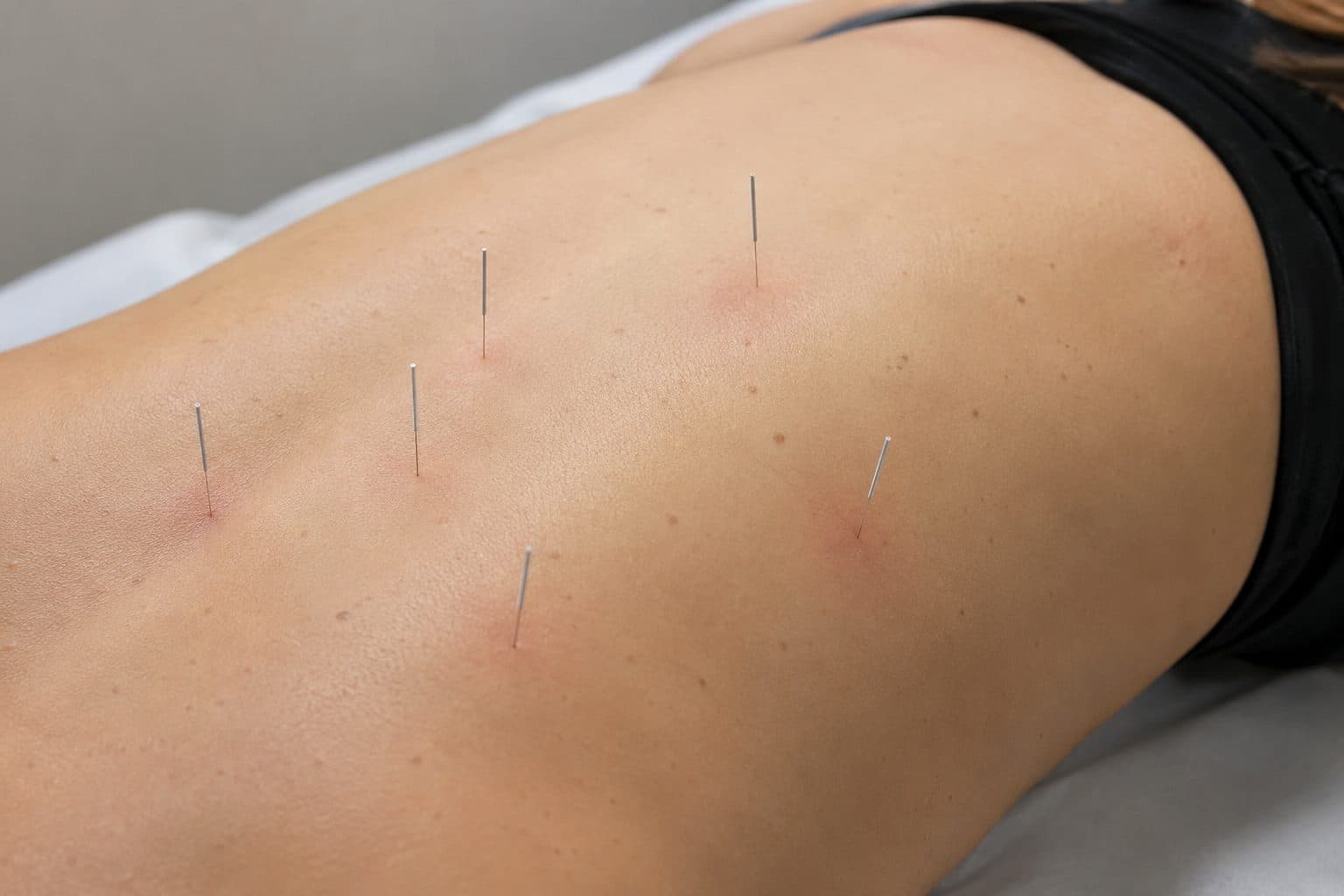
Dry needling in Adelaide is one of the most effective tools we have for releasing stubborn muscle tension and addressing the tight, tender knots known as trigger points. At PhysMed in Unley, dry needling is delivered by David Boyd, a registered physiotherapist who is also a registered Chinese medicine practitioner and registered acupuncturist. That uncommon combination means you receive needling informed by both detailed Western anatomy and a deep understanding of traditional needle techniques: ancient knowledge backed by modern science.
If tight muscles, persistent aches or restricted movement are holding you back, dry needling may be a valuable part of your treatment plan.
What dry needling is
Dry needling uses fine, sterile, single-use needles, the same type used in acupuncture, inserted directly into myofascial trigger points within a muscle. A trigger point is a hyper-irritable spot in a tight band of muscle that can be tender locally and sometimes refer discomfort elsewhere in the body.
The term "dry" simply means nothing is injected; the therapeutic effect comes from the needle itself. When a needle reaches an active trigger point, it can produce a brief twitch response in the muscle. This is understood to help the muscle release, ease tension and improve how the area feels and moves.
How it differs from acupuncture
People often ask how dry needling differs from traditional acupuncture, and it is a fair question because both use the same needles. The key difference is the framework guiding where the needles go.
- Dry needling is rooted in Western musculoskeletal anatomy. Points are chosen based on muscles, trigger points and movement assessment.
- Acupuncture is rooted in Traditional Chinese Medicine. Points are selected according to meridians, traditional patterns and a whole-person assessment.
Because David is trained in both, he can draw on whichever approach best suits your situation, and sometimes blend insights from each. This is part of what makes care at PhysMed distinctive.
Our approach and process
Dry needling is rarely a standalone fix. We see the best results when it is used as one part of a broader plan. After assessing your movement, posture and the muscles involved, David will explain which areas he intends to treat and why.
Dry needling is frequently combined with electro-acupuncture, where a gentle electrical current is applied through the needles to enhance the treatment, and it integrates naturally with hands-on physiotherapy and tailored exercise. For tendon-related issues, it may form part of a structured tendon rehabilitation program.
What people seek dry needling for
Dry needling is traditionally used to support, and many people find it helpful for, concerns such as:
- Muscle tightness and tension
- Trigger points and muscle knots
- Neck, shoulder and upper back tension
- Lower back tightness
- Tight calves, hamstrings and other limb muscles
- Tension that limits movement or comfort
As with all our care, we use measured language. Dry needling may help and can support your recovery, and we will be clear about realistic expectations for your situation.
What to expect in a session
When you arrive, we will confirm your goals and the areas to be treated. The needles are very fine and most people find the insertion only mildly noticeable. As a needle reaches a trigger point you may feel a brief ache, cramp or twitch; this is normal and usually settles quickly.
Sessions are generally short and focused. Afterwards, it is common to feel some muscle soreness in the treated area for a day or so, much like the feeling after exercise. We will give you simple aftercare advice, which often includes gentle movement, hydration and warmth.
Who it is for
Dry needling in Adelaide may suit you if you carry a lot of muscular tension, sit for long periods, train hard, or are recovering from an injury where tight muscles are part of the picture. Because David assesses each person individually, he can advise whether dry needling is appropriate for you or whether another approach would serve you better. If you are uncertain, our FAQ is a good starting point.
How it fits with the rest of PhysMed
Dry needling works best as part of an integrated plan. At our Unley clinic you can combine it with physiotherapy, traditional acupuncture and cupping therapy, all coordinated by the same practitioner. For recovery, many clients add red light therapy or time in the rejuvenation room at Club PhysMed. Bringing these together under one roof means your tension and the reasons behind it are addressed together, not in isolation.
Book your dry needling session
If muscle tension is getting in the way of how you want to move and feel, dry needling in Adelaide could help. Book an appointment online or call us on 0466 337 497 to discuss whether it is right for you. We are located at 1/92 Unley Road, Unley SA, and you are always welcome to get in contact with any questions.