When we talk about recovery, most people picture sore muscles, foam rollers and rest days. But some of the most important recovery happens somewhere less visible: your nervous system. If you have ever trained consistently, eaten well and still felt flat, tense or unable to sleep, your nervous system may be the missing piece. At PhysMed we treat rest as a skill you can practise and improve, not something that simply happens when you stop moving.
Two modes: fight or flight, rest and recover
Your autonomic nervous system runs quietly in the background, regulating things you rarely think about — heart rate, breathing, digestion and the release of stress hormones. It operates in two broad modes. The first is the "fight or flight" state, driven by the sympathetic branch. It is designed to help you respond to challenge and threat: heart rate climbs, muscles tense, attention narrows. The second is the "rest and recover" state, driven by the parasympathetic branch. This is where heart rate settles, breathing slows, digestion works well, and the body gets on with repair and adaptation.
Both modes are healthy and necessary. The problem in modern life is not that we have a stress response — it is that many of us rarely switch it off. Training load, work pressure, constant screens, caffeine, late nights and poor sleep can keep the sympathetic system idling high for hours or days at a time. Deep healing and meaningful adaptation tend to happen in the second state, so if you spend most of your time in the first, recovery suffers no matter how good your gym program looks on paper.
Why this matters for healing and performance
Think of adaptation as the body's response to a stress plus the recovery that follows. Training, rehabilitation and even hard mental work are all stressors that prompt the body to come back stronger — but only if there is enough genuine recovery to allow that rebuilding. When the nervous system stays revved, the rebuilding phase gets squeezed. Sleep becomes lighter, tissues take longer to settle, and the small daily repairs that keep you robust fall behind.
For anyone recovering from an injury, this is especially relevant. Pain itself can be amplified by a sensitised, stressed nervous system, which is one reason two people with similar injuries can have very different experiences. Helping the nervous system downshift can support more comfortable, more consistent rehabilitation. For athletes and active people, the same principle explains those frustrating plateaus where effort goes up but results stall.
Signs your nervous system needs recovery
You do not need a lab to notice when your system is stuck in a high gear. Common signs include:
- Trouble winding down at night or broken, unrefreshing sleep
- Feeling "wired but tired" — exhausted yet unable to relax
- Plateaus in training despite working hard
- Lingering tension that massage alone does not seem to fix
- A short fuse, low patience or feeling constantly "on"
None of these are diagnoses, but together they are a useful nudge that recovery, not more effort, is what your body is asking for.
Tools that help you downshift
The encouraging part is that the nervous system responds to simple, repeatable inputs. You can deliberately practise shifting into the rest-and-recover state, and the more you practise, the easier it becomes. Tools we find genuinely useful include:
- Heat, such as an infrared sauna, to relax muscles and gently encourage the body to downshift
- Cold, such as a controlled ice bath, which provides a sharp, manageable stress that can build resilience and a sense of calm afterwards
- Breathing and stillness — slow, longer exhales are one of the most direct ways to signal safety to the nervous system
- Movement that you enjoy, done at an easy intensity, which can be restorative rather than draining
- Consistency — recovery is a habit you build, not a one-off event you schedule when you are already burnt out
The point is not to chase intensity. A gentle routine done regularly will usually do far more for your nervous system than an occasional extreme session.
A simple daily practice
If all of this feels abstract, try anchoring it to one or two small daily habits. A few minutes of slow breathing before bed, with the exhale longer than the inhale, sends a clear signal to your body that it is safe to settle. A short walk after a stressful day, without your phone, lets your system come down a gear. A few quiet minutes in warmth, or a brief cold exposure followed by calm breathing, can mark a deliberate transition from "on" to "off". None of these require special equipment, and their power lies in repetition. Over weeks, you are quite literally training your nervous system to find its calmer gear more easily — and that learned skill carries over into sleep, recovery and how you handle pressure.
It also helps to notice and remove the small things that keep you switched on. Late caffeine, doom-scrolling in bed, and working right up until the moment you try to sleep all keep the sympathetic system idling. You do not need to overhaul your life overnight; choosing one input to add and one to remove is often enough to start shifting the balance.
How PhysMed approaches nervous system recovery
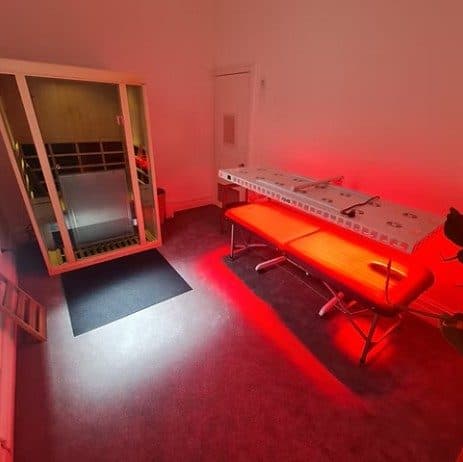
Our recovery centre is designed around one simple idea: most of us are very good at switching on and quite poor at switching off. Club PhysMed gives you a dedicated space and a guided routine to practise that skill. Our signature Rejuvenation Room brings together red and near-infrared light, far infrared sauna, tendon loading, breathwork and optional cold immersion, sequenced so the experience naturally moves you toward that calmer, recover-and-rebuild state.
Because everything is overseen by physiotherapists, your recovery sessions are shaped around your goals and any rehabilitation you are working through, rather than being a generic wellness add-on. This reflects how we work across PhysMed — combining ancient knowledge, including practices that have long understood the value of breath and stillness, with modern science. The aim is to help you take your health into your own hands, lean less on medication where appropriate, and feel genuinely rested rather than merely less tired.
If you suspect your nervous system has been stuck in a high gear, learning to downshift could be one of the most valuable recovery skills you ever build. To get started, book an appointment or call us on 0466 337 497, and we will help you create a recovery routine that lets your body do its best healing.